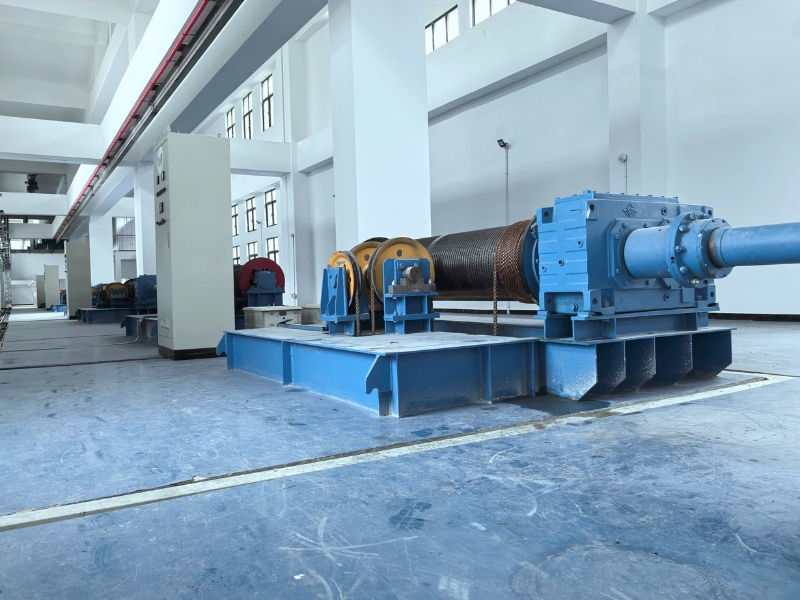

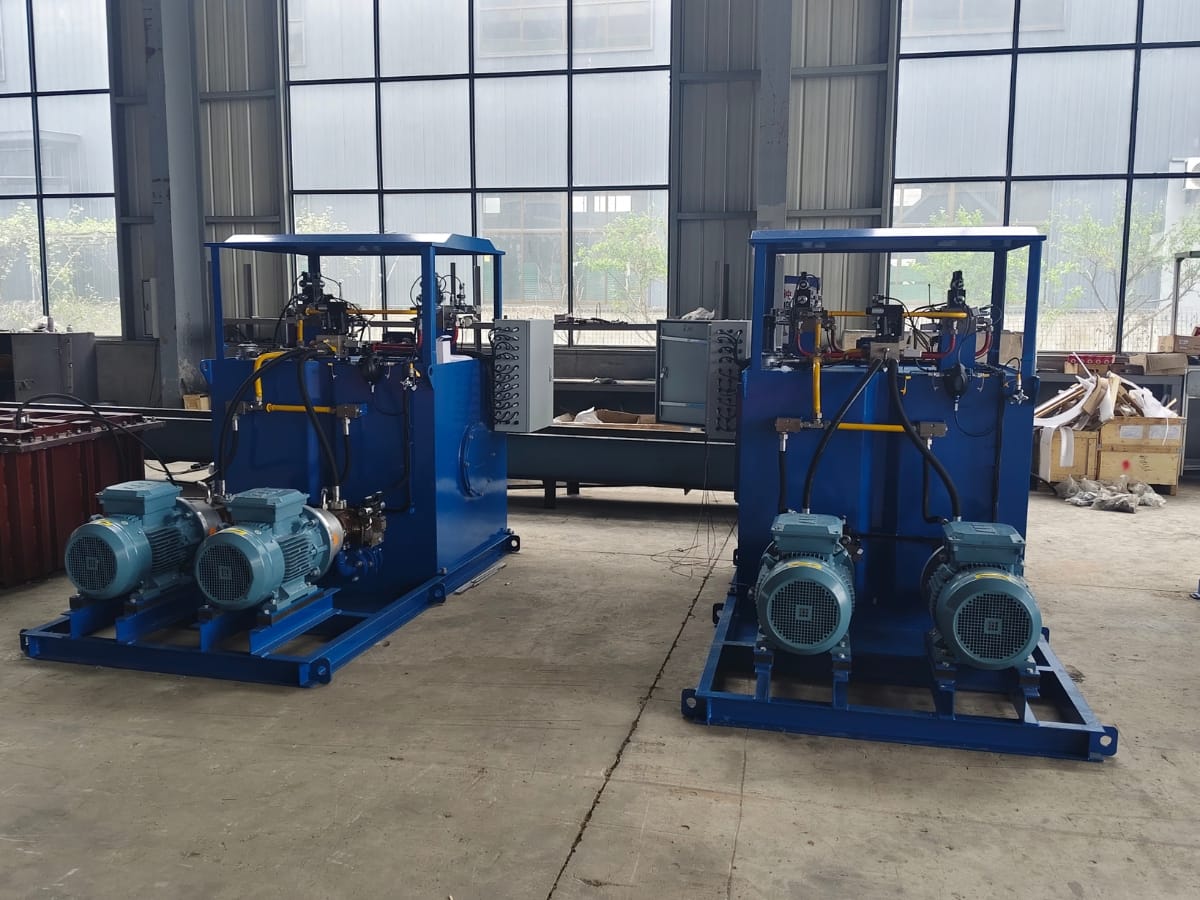
Hydraulic Gate Hoists
Review hydraulic hoist options and project requirements for cylinders, hydraulic power units and controls.
Discuss Hydraulic HoistsFUDA RADIAL GATES
Fuda supplies radial gates for spillway discharge and water-level control. Share your opening dimensions, design head and site drawings to discuss a gate configuration and hoisting arrangement suited to your project.
Discuss Your ProjectHave project drawings? Include them with your inquiry.
APPLICATIONS & PROJECT FIT
Radial gates are used to regulate discharge through gated spillways and manage reservoir water levels. Suitability depends on the hydraulic conditions, available installation space and operating requirements of your project.
Adjust the gate opening to regulate discharge according to the project's operating plan.
Coordinate gate operation with reservoir water-level targets and downstream discharge requirements.
Review pier geometry, trunnion locations, gate movement clearance and maintenance access before confirming the arrangement.
STRUCTURE & OPERATION
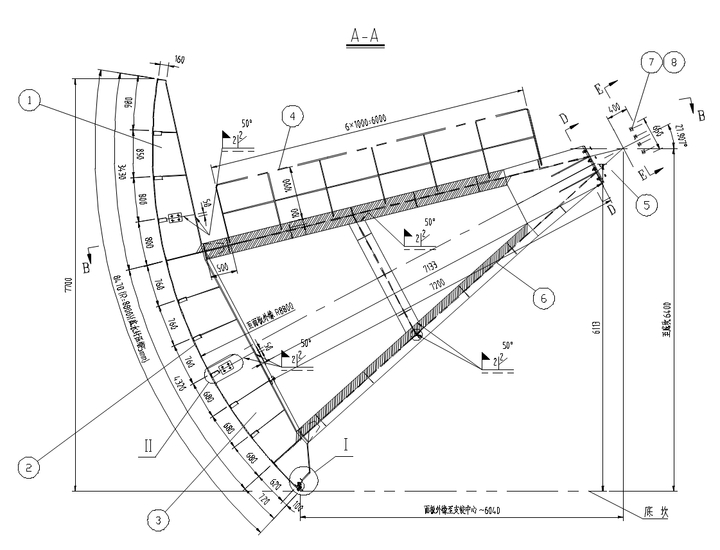
A radial gate uses a curved gate leaf connected to support arms that rotate about fixed trunnions. The gate geometry, supporting structure and sealing interfaces must be coordinated with the project's hydraulic conditions and civil layout.
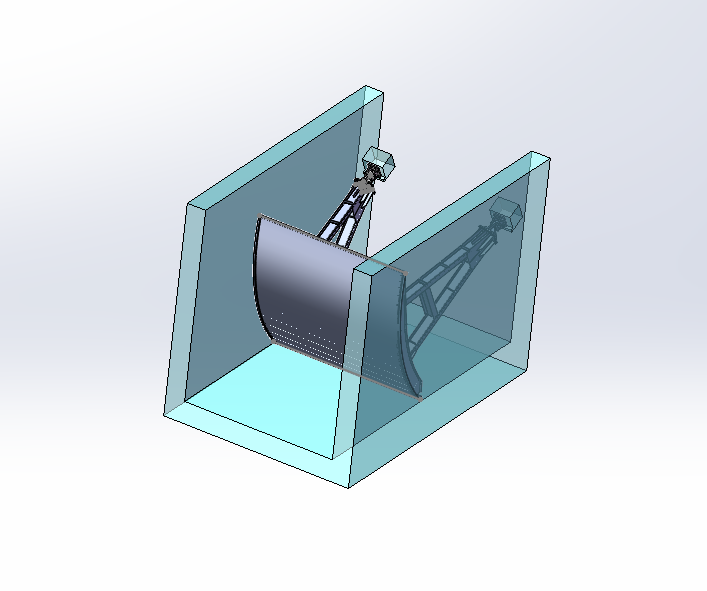
The curved skin plate forms the water-retaining surface. Its radius and dimensions are defined around the opening, design head and gate arrangement.
Beams and stiffeners support the skin plate and transfer loads to the radial arms. Their arrangement is part of the project-specific structural design.
The arms connect the gate leaf to its pivot supports. Trunnion positions influence the movement envelope, pier interfaces and hoisting layout.
Side and bottom sealing arrangements are selected to suit the gate geometry, contact surfaces and project leakage requirements.
SPECIFICATIONS & CONFIGURATION
Radial gate dimensions and configuration depend on the opening, hydraulic conditions and installation layout. The following information helps define the gate arrangement and coordinate its structural, sealing and hoisting interfaces.
| Design Input | Information to Provide |
|---|---|
| Opening Dimensions | Clear opening width and height, with drawings where available. |
| Hydraulic Conditions | Design head and relevant upstream and downstream water levels. |
| Gate Geometry | Specified gate radius and trunnion locations, if already defined. |
| Civil Layout | Pier arrangement, installation space and gate movement clearance. |
| Operating Requirements | Required opening range, operating frequency and opening or closing time. |
| Hoisting Arrangement | Preferred hoist type and details of any existing equipment. |
| Materials and Protection | Project requirements for steel materials, corrosion protection and seals. |
| Supply Scope | Required gate components, embedded parts, hoisting equipment and controls. |
| Project Specifications | Applicable design specifications, inspection requirements and required documents. |
If some parameters are not yet available, send the drawings and project requirements you have.
GATE & HOIST COORDINATION
The gate, hoisting equipment and controls need to be considered together. Define the operating requirements and installation interfaces early to establish a coordinated arrangement for your radial gate project.
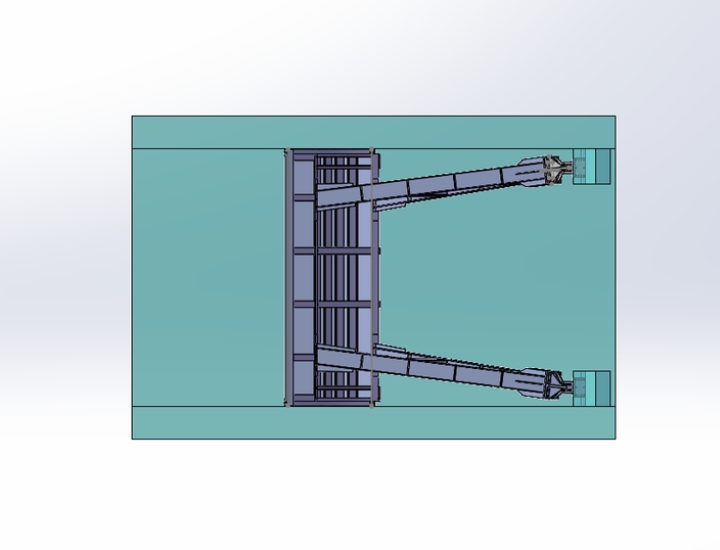
Review cylinder mounting positions, connection points and the stroke required throughout the gate's operating range.
Coordinate gate lifting connections, hoist supports and civil interfaces using the project layout and equipment drawings.
Specify local or remote operation, position feedback and coordination between lifting points according to the project's operating requirements.
Let us know whether your inquiry covers the gate, hoisting equipment, controls or a combined supply scope.
WORKSHOP & FABRICATION
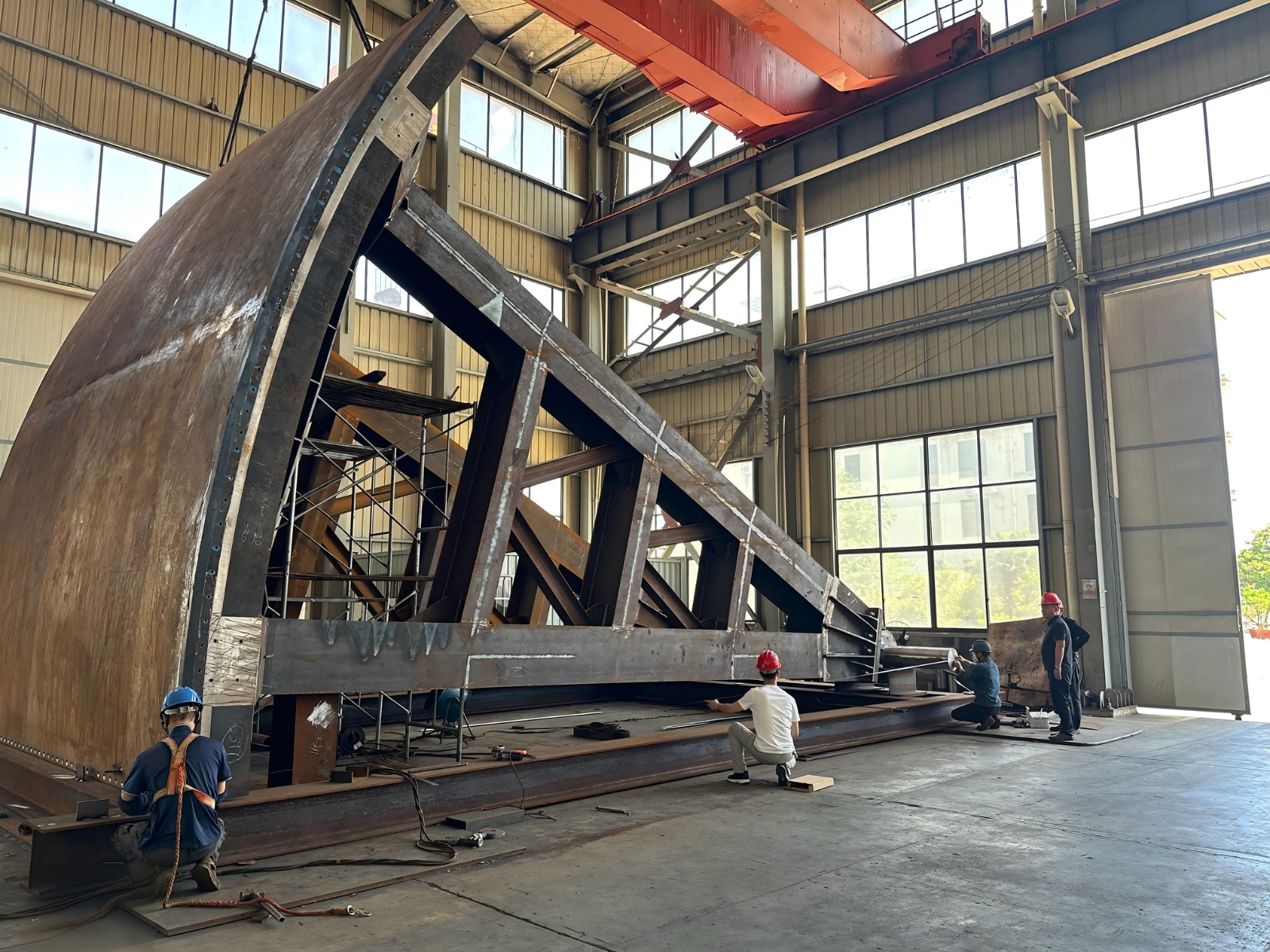
Fuda’s workshop brings together the curved gate leaf and support structure during radial gate fabrication and pre-assembly. This stage provides an opportunity to review component fit and assembly interfaces against the project drawings.
The curved skin plate, beams and stiffeners form the gate leaf assembly, with geometry defined by the project drawings.
Bringing the gate leaf and support arms together allows their relative positions and connection interfaces to be reviewed before subsequent assembly stages.
Specify the dimensional checks, weld inspections, coating records and other acceptance documents required for your project when defining the supply scope.
FIELD INSTALLATIONS
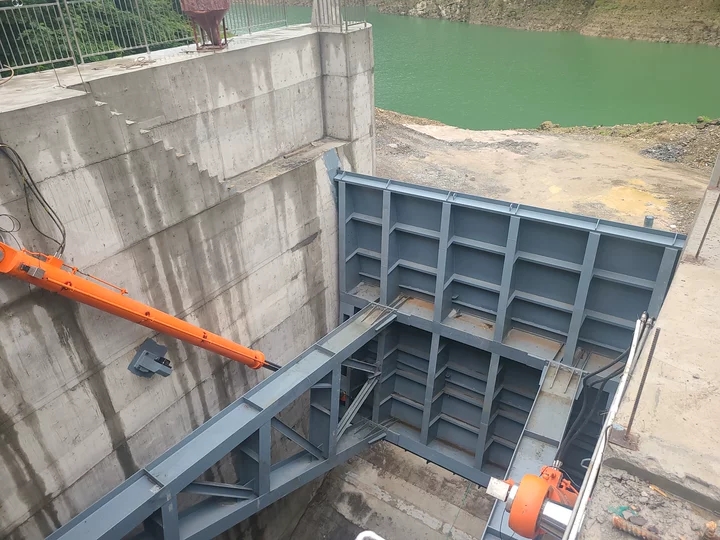
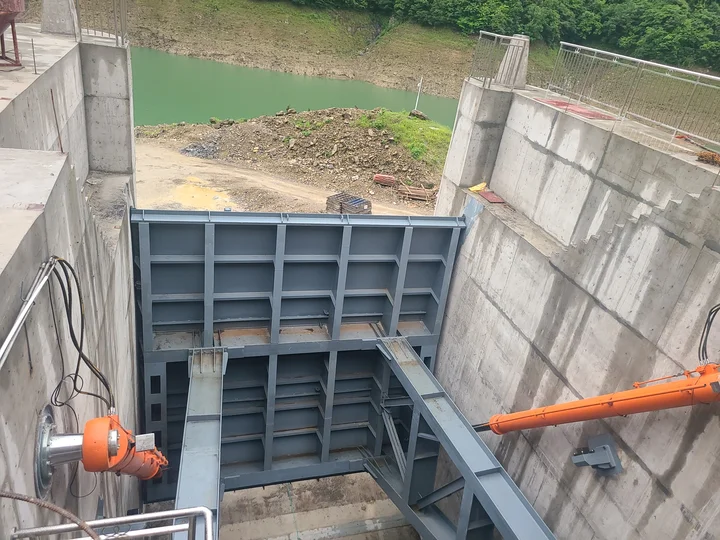
Explore radial gate installations showing the gate leaf, supporting structure and opening arrangement within the surrounding civil works. These photographs provide a practical view of the equipment in its installation environment.
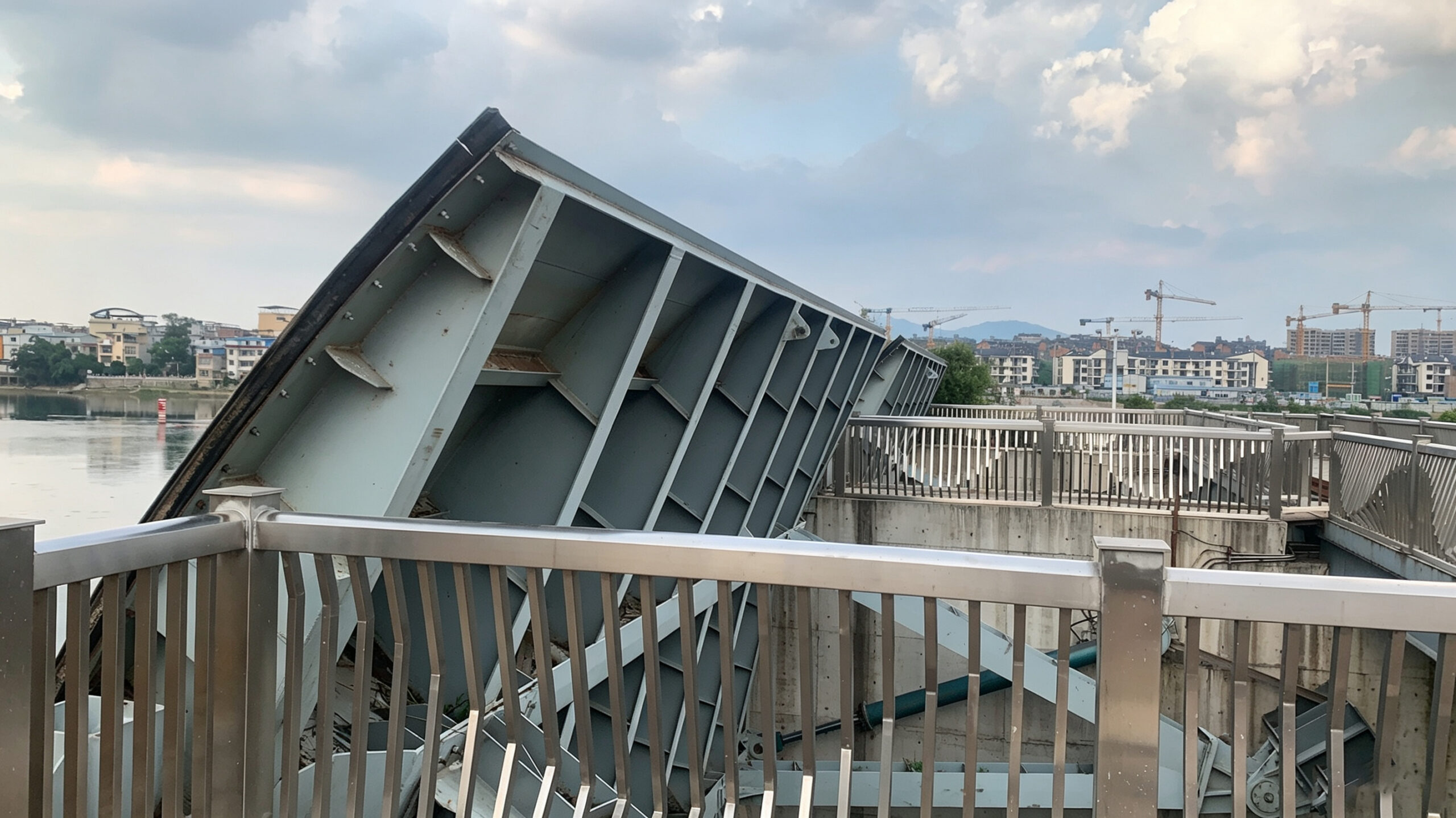
Site view showing the gate leaf, stiffening structure and surrounding access platform.
View Full Image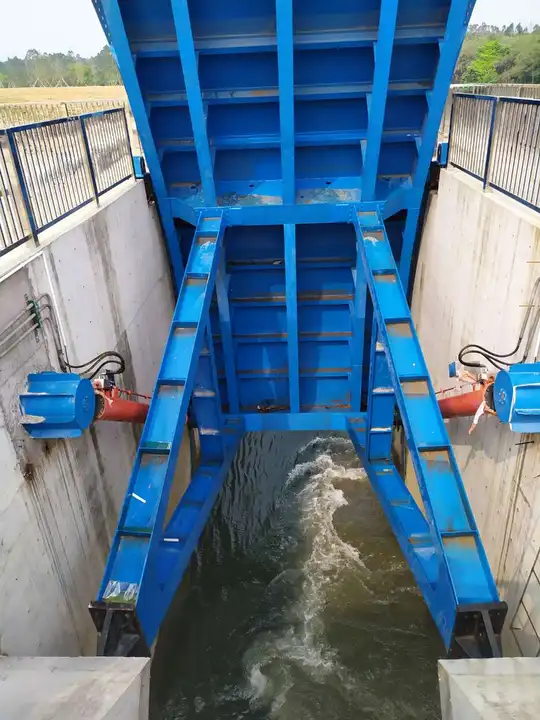
View of an open radial gate showing the support arms, hydraulic cylinders and water passing beneath the gate.
View Full Image